Weekly reports, local knowledge and guides for Bantham, Bigbury & Salcombe β straight from the water.
Bank Holiday is done, the visitors have mostly gone home, and the South Hams shoreline has slipped into one of the best fishing windows of the year. Bass retention has been open since 1st April, the mackerel are properly landing along the cliffs, and the Avon, Erme, Yealm and Salcombe/Kingsbridge estuaries all closed to bass and sandeel-bait fishing on 30th April for the summer nursery period. Translation β pack the rods, point the truck towards the open coast, and ignore the estuary marks until November. Here's how the first week of May is shaping up.
Sea temps along the South Hams are sitting around 11.5β12Β°C and rising a touch each week, which is the threshold where the bass really start to commit to the inshore reefs. The reports through the back end of April were patchy β a few small schoolies on the lures off Bigbury, a couple of better fish from Thurlestone gully β but the last seven days have been noticeably more productive. Marc Cowling at South Devon Bass Guide had a strong week and the rocky ground from Hope Cove east to Bolt Tail is fishing well on the rising tide, especially in the last hour of light. The fish that were being caught this week were mostly in the 2β4lb range, with a couple of better ones nudging 5lb. Plenty under the 42cm minimum too, so be ready to release.
The pattern at the moment is classic early-May β fish working the white water around the kelp edges on a building tide, dropping back as it slackens, then showing again on the early ebb. Soft plastics on a 7g jighead are doing damage in clear water, and a senko-style stick worked slowly through the swirl is hard to beat at dusk. If the surf is up at Bantham, the river mouth itself isn't fishable for bass any more (estuary closure runs from the bar inwards), but the open beach to the south of the rivermouth is fair game and has been throwing up the odd good fish on plugs in the last hour of light.
The mackerel are finally in. Reports from Stoke Point and the Start Point ledges this weekend were good β proper feathers-and-strings sessions with a dozen-plus fish in an hour when the tide ran right. They're a touch later than last year but it's catching up fast. If you're after a freezer fill, get yourself round to Hallsands, Beesands or the cliffs east of Hope Cove with a set of mackerel feathers and a 4oz lead, and fish the moving water on the bigger tides. They'll be in numbers along the whole coast within a fortnight if the temps keep rising.
Mackerel are also the gateway to bigger sport β fresh strip baits are pure bass currency, and a flapper on a running ledger off the rocks at the right state of tide is one of the most reliable ways to put a five-pounder on the bank. Bring a sharp knife and a small bait bucket. Don't forget that anything you take has to be eaten or used the same day β they go off in hours in spring sun.
Couple of suggestions for the week, all open-coast and all clear of the estuary closures. Bantham south end β walk past the main car park beach and onto the rocks south of the rivermouth, lures into the rip on the rising tide. Bigbury reef at low water β the kelp ledges off the south side of Burgh Island fish well on a falling tide for both bass and the odd pollack. Thurlestone gullies β classic fly and lure ground, easy walk in from the car park, low water is the time. Bolt Tail β a bit of a yomp from Hope Cove but the easternmost rocks have been throwing up better fish this last fortnight; mind the rebound waves on a swell. Start Point ledges β for the bigger picture session: bass, pollack, mackerel and the chance of a wrasse all in one tide. All of these are best on the move, fish two or three spots in a tide rather than camping on one.
Plaice are showing on the Skerries Bank for the boat anglers, with a few decent fish (2lb+) reported on lugworm and squid cocktails over the weekend. Inshore on the rocks the wrasse fishing is getting going β Hallsands and the Mew Stone area are both worth a few drops with a soft plastic crab on a Texas rig if the weather settles. The first smoothhound of the year usually shows around the third week of May off Slapton and the gravel beaches east of Start, so worth keeping an eye on the rod tips if you're set up with crab or squid bait. Pollack are still about in the kelpy ground but they're moving deeper as the water warms β better off the boat now than off the rocks.
Garfish should turn up any day. They're a brilliant fish for kids on light tackle with a float β try the Salcombe ferry pontoon (catch and release only inside the harbour), or the open coast off Beesands at high tide. They hit anything silver and fight like a tarpon scaled down to a foot long.
The forecast for the next ten days is settled-ish. A light WSW airflow through midweek with calm mornings, then a possible front sliding through the weekend bringing some swell back to the open coast β which usually means a bumper bass session for anyone willing to fish the white water on the back of it. Tides are working towards springs by next weekend, so the bigger marks at Bolt Tail and Start Point will fish best on the bigger ranges. By the second half of May the water should be properly through 12.5Β°C and the bass fishing steps up another gear β that's when the lure sessions start producing genuine 5β7lb fish on a regular basis along the South Hams.
Last reminder β the estuaries are closed to bass and sandeel-bait fishing until 1 November. That covers Salcombe Harbour, Kingsbridge Estuary, the Avon, Erme, Yealm, Dart and Teign. You can still target mullet, flounder and other species in the estuaries with non-sandeel baits, but if you're targeting bass it's the open coast only from now until autumn. Stick to it β the nursery rules are what keep the South Hams fishery in the shape it's in.
Tide times, sea temp and wind for the South Hams coast β updated hourly.
See live conditions β
It's the last week of April and the Salcombe estuary is in that lovely half-busy, half-quiet phase where the racing is on, the cruisers are starting to launch and the bar isn't yet jammed with weekenders. Midweek evening series got going on the 15th, the Spring Series is into its final weeks, and the May Bank Holiday weekend is sitting on the horizon like the unofficial start gun for the proper season. If you've not had the boat in the water yet, this is the week to get it sorted.
Wednesday evening racing kicked off on the 15th and we're now two races in. For my money, midweek at Salcombe is genuinely the best racing of the year β possibly anywhere on the south coast. You knock off work, drive down through the lanes, rig up on the foreshore in the late-afternoon sun, and you're on the start line by 6pm with the estuary glinting and the breeze funnelling down from Snapes Point. It's nothing like the formality of a Saturday morning β it's quick, social, and you're back on the pontoon by 8pm with a pint in hand.
Numbers have been solid for the first two evenings. The Solos have been turning out in good shape, the Merlin fleet is back at full strength after the Silver Tiller weekend, and there's been a healthy mix of the smaller handicap classes filling the back of the line. Fluky is the polite word for the wind down here on a spring evening β the hills funnel it in random directions and the only people who really nail it are the locals who've sailed the same shifts a thousand times. If you're new to the estuary, hang back of the line for the first race or two and learn the bends. You'll lose less time that way than trying to bluff it.
The May Day Bank Holiday weekend (Saturday 2nd to Monday 4th May) is shaping up to be the first proper test of the year. Looking at the long-range models the wind is set to back round to a moderate WSW by Saturday β pretty standard South Hams fare β with a chance of a clearer pattern on Sunday and a building southerly through Monday. Translation: get out early on Saturday for the Spring Series finale, take Sunday for a cruise up the estuary if the wind is kind, and treat Monday as a possible blow-out. It rarely all lines up, but two out of three will do.
If you're not racing, the weekend is the moment Salcombe properly comes to life. The Whitestrand pontoons start filling with visiting boats, the harbour taxi runs all hours again, and the Ferry Inn over at East Portlemouth gets that lovely buzz where every other table has a salty dog with a half-rigged jacket on the back of the chair. Crab pots reappear off the South Sands beach and the first proper queue for ice creams snakes around the Cliff House. It's not yet July chaos, but it's a definite shift up.
The yawl fleet is now nearly all back on the water β by my count there were nineteen of them on the harbour moorings as of yesterday afternoon, with another two or three still up in Henley & Sons' yard finishing off winter work. If you've never watched a Salcombe Yawl race, the Bank Holiday Saturday is a decent opportunity. They're doing the Yawl Spring Cup over the weekend and there's almost nothing else like it on this stretch of coast β wooden boats, gaff rigs, and crews who treat tactics in the estuary like a kind of slow-burn chess match.
For the cruising fleet it's the usual late-April scramble for visitor moorings. The harbour office have been reporting that the inner pontoon spaces are already booked solid for both Saturday and Sunday nights, but there's still good availability on the deepwater visitor moorings out by Salt Stone. Worth booking ahead via Harbour Office on VHF Channel 14 rather than rolling up and hoping. If you're cruising in from Plymouth or Dartmouth, the bar is workable on the rising tide most of the weekend β neaps moving towards springs β but check the harbour office bar warning before you commit. A rolling SW swell on top of an ebbing spring tide is no joke.
The calendar from here gets serious. The Midweek Series rolls on every Wednesday through the summer, with the Sailors Bowl supper in the clubhouse afterwards β bring an appetite. Spring Series wraps up on the 2nd and the Summer Points racing kicks in straight after. There's a Yawl Open weekend in mid-May, Merlin Rocket Week is locked in for early July as always, and then it's full-tilt through Town Regatta at the end of July and Salcombe Regatta in early August. If you're new to Salcombe sailing, that midweek-and-Saturday cadence from now until September is what makes the place tick.
Out of the harbour and up the estuary, the cruisers and SUPs are also waking up. The Kingsbridge end is back to mirror-flat on still evenings, the herons are stationed in their usual creeks, and the bass boats are working the mouth at dawn. Whatever your preferred floating object, the South Hams water is open for business again. If you've been stewing in front of the laptop wondering when the season really starts β it's now. Get the boat on the water.
Wind speed, direction and tide state for the Salcombe estuary β updated hourly.
See live conditions β
The Easter fortnight is done, the schoolβs gone back, and Bantham has that slightly hungover feeling you always get in the third week of April β car park half empty, beach mostly yours, and a proper weather window rolling in. The long-range charts have been threatening a decent WSW pulse for about ten days and itβs finally looking locked in for Friday 24th. Surf-Forecast has it pinned at around 5ft, which for Bantham in late April is pretty much ideal. Clean period, light winds forecast for the morning, and the water is finally warming up enough that youβre not counting down the minutes until you can feel your feet again.
As of this morning Bantham is ticking over around 1.5ft with a mixed swell and light variable winds β pretty textbook for a settled mid-week in late April. Itβs not going to set the world on fire but the longboarders have been having a nice time on the push tide, and a couple of the regulars were out at first light making the most of it. The real story is whatβs coming, not whatβs here. Between now and Thursday weβve got small-to-flat conditions, light sea breezes filling in by midday, and not much for shortboarders to get excited about. Thursday is the day to check your kit, wax up a board and start looking at the forecast properly.
The other thing worth mentioning is the water temperature. Weβre now sitting around 11Β°C along the South Hams coast, which is a full degree warmer than the start of the month. That might not sound like much but it makes a proper difference β especially if youβre switching from a 5/4mm down to a 4/3mm for the first time this year. Boots are still a sensible call before dawn, but some of the hardier locals were paddling out barefoot last weekend and didnβt die. Springβs on the turn.
The reason Friday is looking so good is a classic late-April lineup. A low-pressure system spinning out in the mid-Atlantic has been pushing swell east for the last 36 hours, and the models have it arriving on our doorstep with the period nudging 13 seconds. Thatβs the kind of long-period groundswell that Bantham loves β it wraps cleanly onto the sandbars, breaks with proper shape, and gives you actual walls to draw lines on rather than the close-out slop weβve had most of the last fortnight. Tide-wise, low water is around 11am Friday, so if you can get on it from 9am through to early afternoon youβll catch the best of it as the bars start to expose and the waves break further out.
The wind is the bit to watch. Current model runs show light NE to E first thing, which would be perfect β textbook offshore for Bantham β swinging more northerly by lunchtime and then onshore SW by late afternoon. So donβt sleep in. If you get there for dawn and youβre out of the water by 1pm, youβll have had the best session of the month. If you rock up at 3 expecting leftovers, youβll find it blown and bumpy. Pretty standard drill for spring at Bantham, but worth repeating every time.
Saturday looks like the swell holds around 3β4ft with wind shifting to a moderate SW β so not as clean as Friday but still plenty of fun-size waves for most ability levels. If youβve got family in tow or youβre introducing someone to surfing, Saturday late-morning at Bantham or Bigbury will be a great shout once the tide pushes up. Sunday is trickier β the models are split between a clean-ish rebuild of swell on a slack wind pattern and a front coming in early. Iβd pencil it in as a possible rather than a banker. By Monday 27th the swell looks to drop off and weβre back into small-and-clean territory heading into the last few days of the month.
Longer term the signs are encouraging. The jet stream pattern is starting to look more settled as we move into May, and the early indications are that weβll get a run of small-to-medium swells with lighter winds β which is pretty much what the South Hams coast does best. May and June at Bantham, when it all lines up, are genuinely as good as anywhere in the country. The crowds are manageable, the water is warm enough for a 3/2mm, and you get those long glassy evenings that make you forget about the winter you just endured.
A couple of housekeeping notes for Friday. The Bantham car park is still on the off-peak pricing until May, so itβs a bit cheaper than youβll find come half-term. The lifeguards arenβt on yet β they donβt cover the beach full-time until later in spring β so if youβre going out bigger surf alone, let someone know the plan. The Sloop Inn at Bantham will be open for a post-session pint by lunchtime, and the Oyster Shack over at Bigbury is doing the spring menu if you fancy something a bit more substantial. Classic South Hams surf day, in other words β wave in the morning, pub at lunchtime, and home before the roads get busy.
Real-time swell, wind and tide data for Bantham and the South Hams coast.
See live conditions β
Forget fighting the Easter crowds at Bantham for a minute. If you own a SUP board and you haven't paddled the Kingsbridge Estuary on a calm spring evening yet, you're missing one of the best experiences the South Hams has to offer. The water is warming up, the evenings are stretching out, and right now β mid-April β the estuary is about as good as it gets for flat-water paddling. Barely a ripple, herons everywhere, and you can paddle from Kingsbridge all the way down to Salcombe if the tide is right.
There's a window in spring where the estuary goes from being a cold, windswept channel to something genuinely magical. The clocks have changed, the sea temperature is creeping up past 10Β°C, and the prevailing southwesterlies that hammer the open coast don't really touch the estuary because it's so sheltered by the surrounding hills. On a still evening you get this mirror-flat water that reflects the fields and trees on both banks, and it stays light until nearly 8pm now. You can launch at 5pm after work and get a solid two-hour paddle in before dark β that wasn't possible a month ago.
The other thing about April is that the summer crowds haven't arrived yet. Come July and August the estuary is rammed with kayaks, dinghies, RIBs and other paddleboarders, and it can feel more like a motorway than a creek. Right now, midweek especially, you'll often have entire stretches completely to yourself. It's proper peaceful β just the sound of your paddle and the occasional splash of a mullet.
The classic launch spot is the slipway at Kingsbridge β there's parking right next to the quay and you can be on the water in minutes. From there you paddle south down the estuary, past Charleton and Frogmore, through Blanksmill Creek and eventually into the wide stretch above Salcombe. The full run from Kingsbridge to Salcombe is roughly four miles and takes about ninety minutes at a relaxed pace, but you need to time it with the tide. The estuary drains significantly on the ebb β some sections between Kingsbridge and Frogmore become mud flats at low water and you'll find yourself stranded with a very long walk back to the car.
The golden rule is to launch around two hours before high tide and paddle with the flood. That way the water is deep enough everywhere, the gentle current gives you a free push towards Salcombe, and you arrive at the harbour right around high water when there's maximum depth for exploring the side creeks. If you want a shorter session, Frogmore Creek is a beautiful there-and-back paddle β launch from the small quay at Frogmore, head up the creek towards East Charleton, and you'll be surrounded by woodland and wading birds. It's about a mile each way and perfect for an evening after work.
Don't be fooled by the sunshine β 10.5Β°C water is properly cold if you fall in, and on a SUP you will fall in eventually. A shortie wetsuit is the bare minimum but a 3/2mm full suit is the smarter choice, especially if there's any breeze. Some of the keener paddlers down here are still in drysuits at this time of year, which might look excessive but it means you can paddle in complete comfort without worrying about the cold. A buoyancy aid is a no-brainer on the estuary β the current can move faster than you think, particularly around the narrows near Snapes Point.
Kit-wise, an all-round touring board in the 10'6" to 12'6" range is ideal for the estuary. You don't need anything fancy β inflatables work brilliantly here because the water is flat and the extra stability is nice when you're stopping to take photos or watch the wildlife. A dry bag strapped to the front with your phone, a flask of tea and a snack is about all you need. The Salcombe end of the estuary has decent phone signal if you need to call for that lift back.
The estuary is properly waking up for the season now. Salcombe Yacht Club's spring training courses are running through April β the adult beginner sailing sessions start on the 21st, and the Yawl training weekend is on the 24th to 26th if you fancy trying something different. The harbour is getting busier with fishing boats heading out for the early bass and pollock β the season opened on April 1st and the word is that some decent fish are already being caught around the estuary mouth and out towards Prawle Point. If you're on a SUP and you see the bass boats heading out at dawn, you know the conditions are calm enough for a good paddle.
Further afield, the Easter events are winding down but there's still plenty going on in the South Hams. The yoga-by-the-sea sessions at Hope Cove have started up again, and if you want to combine your SUP with something different, there are SUP yoga classes running in Kingsbridge through the spring. Whether that's your thing or not, the point is that the water around here is starting to feel alive again after winter β and a SUP board is one of the best ways to enjoy it.
Tide times, wind and water conditions for the Kingsbridge Estuary and Salcombe Harbour.
See live conditions β
After a couple of weeks of onshore mush and flat spells, Bantham has woken up this week with a proper clean WSW groundswell pushing through. We're talking chest-to-head high sets on the low tide, glassy mornings before the sea breeze kicks in, and that classic April setup where the days are long enough to get a dawn and an evening session in without rushing. If you've been waiting for the first really good surf of spring β this is it.
As of this morning the swell is sitting around 1.5β1.8m at 12β13 seconds from the WSW, which is about as textbook as it gets for Bantham. That period means the waves have had a long fetch across the Atlantic and they're arriving with proper shape β clean faces, decent shoulders, and enough push to get you moving without having to fight for every wave. The wind has been light and offshore from the east first thing, swinging onshore from the southwest by early afternoon. So the golden window is roughly 7am to midday.
The sandbars are in decent nick after the winter storms reshaped the beach. There's a good left breaking off the rocks at the south end of the beach that's been working well on the lower stages of the tide, and the main peak in the middle of the bay has been offering up some fun rights on the push. If it's busy β and it will be this week with the Easter holidays β the south end tends to thin out a bit because the paddle out is longer and the current can be a handful on the bigger sets.
We're on spring tides right now, which means a bigger tidal range and faster water movement. At Bantham that matters because the rip alongside the rocks gets noticeably stronger on springs, especially on the ebb. The sweet spot for most ability levels is from two hours before low to an hour after β that's when the bars are most exposed and the waves break furthest out with the cleanest shape. On the push tide things tend to get fatter and more close-out, though the inside reform can still be fun for longboarders and beginners.
Thursday and Friday are looking like the pick of the week. The swell holds around 1.5m with the period staying above 11 seconds, and the wind forecast is showing light northerlies both mornings. By Saturday the wind swings more westerly and the swell drops a touch, so if you can get down midweek you'll score the best of it. Sunday looks like a potential lay day β models are showing a front pushing through with rain and onshore wind, though that could easily shift.
Bigbury-on-Sea has been working on the higher tide stages this week β it doesn't have the same low-tide bars as Bantham but the beach break in front of the car park can produce surprisingly good peaks when the swell wraps in from the south side of Burgh Island. Hope Cove is worth a look if the swell gets overhead β the outer reef at the south end of the cove lights up on big WSW swells and it's one of those waves that most people don't even know exists. You need it to be 2m-plus and the tide to be mid-to-high, but when it works it's quality.
Water temperature is hovering around 10Β°C, which is pretty standard for early April. A 5/4mm wetsuit is the safe bet, and boots are still a must unless you enjoy the feeling of numb feet for twenty minutes. Gloves are optional at this point β most people are ditching them now the air temperature is climbing into double figures during the day. The clocks going forward last week means there's light in the water from about 6:30am to nearly 8pm, so there's no excuse not to get wet.
The longer-range models are suggesting another pulse of WSW swell arriving mid-next week, possibly a touch bigger than what we've got now. If that coincides with the neap tides and lighter winds we could be looking at one of those proper April windows that remind you why this stretch of coast is so good. Keep an eye on the charts and be ready to move. Bantham in April, when it lines up like this, is as good as anywhere in Devon.
Real-time swell, wind and tide data for Bantham and the South Hams coast.
See live conditions β
April has arrived and Salcombe estuary is busier than it's been since last autumn. The Spring Series is well underway at SYC, there are kids rigging dinghies on the foreshore for the Easter camp, and this Saturday sees one of the biggest events of the early season β the Merlin Rocket Silver Tiller. The sailing year down here is properly cranking now.
Today marked the start of the SYC Youth Sailing Easter Camp, running April 7th and 8th. If you've walked past the Club this morning you'll have seen the foreshore covered in Optimists, Toppers and the odd RS Feva, with a gang of juniors getting rigged up and heading out into the harbour. It's one of those scenes that makes you remember why Salcombe produces so many decent sailors β kids here grow up on the water the way kids in other towns grow up on football pitches. The conditions looked ideal for it too: a light to moderate breeze funnelling down the estuary, sunshine between the clouds, and enough chop to keep things interesting without being intimidating.
Following right behind the Easter camp, there's a brand new event on the calendar this year: "Ladies That Launch" on April 9th. It's aimed at getting more women out on the water in a relaxed, supportive environment β whether that's sailing, rowing or just getting comfortable around boats. Good to see the Club pushing this, and from what I've heard the sign-ups have been strong.
Five races into the Spring Series and the handicap fleets are starting to sort themselves out. The Fast Handicap fleet have been getting early starts on Saturdays β 10am rather than the usual time β partly because of ongoing dredging work in the harbour that means the start area needs to be clear by a certain point in the tide. It's added a bit of urgency to the mornings, which is no bad thing. The Solo fleet had nine boats out for one of the recent races in a light northeasterly, which is a decent turnout for this early in the year. Spring Series Race 6 is scheduled for this Saturday, April 11th, so if the forecast holds we should see good numbers across the classes.
The big one this week is the Merlin Rocket Silver Tiller event, running Saturday and Sunday, April 11thβ12th. This is a national travellers' trophy event that rotates around clubs, and Salcombe is one of the standout venues on the circuit. The Merlin Rocket class has always had a strong following here β the boat suits the estuary perfectly, fast and responsive with enough sail area to make the most of the fluky Salcombe winds that bounce off the hills on either side. Expect boats from clubs across the south coast and beyond, and some seriously competitive racing.
If you're not sailing in it, it's worth heading down to watch. The best vantage points are from the East Portlemouth side β grab the ferry across and walk along the foreshore β or from Snapes Point if you fancy a bit of a climb. You get the whole estuary laid out below you, and on a decent day with a fleet of Merlins going at it, it's a cracking spectacle. The Island Cruising Club terrace is another solid option if you'd rather watch with a cup of tea in hand.
The calendar from here is stacked. After Silver Tiller and the start of midweek racing, the next landmark is Merlin Rocket Week in early July, followed by the Town Regatta at the end of July and the full SYC Regatta in the first week of August. But that's getting ahead of ourselves. For now, the estuary is in that sweet spot β the moorings are filling up, the racing is underway, and the water is still quiet enough that you can enjoy it without fighting for space. If you've been thinking about getting your boat launched, don't leave it much longer. The season waits for nobody.
Wind speed, direction and tide state for the Salcombe estuary β updated hourly.
See live conditions β
Two weeks into April and the fishing is properly coming alive along the South Hams coast. Water temperatures have crept up to around 11Β°C and there are sandeels showing around the Bantham rivermouth β which means the bass are following. Evening lure sessions are getting interesting.
The bass fishing has stepped up noticeably in the last week. The combination of longer days, warming water and a run of settled spring tides has got them moving inshore properly now. The best sessions are happening in the last two hours of the flood and the first hour of the ebb, particularly around dawn and dusk when light levels are low and the fish are less spooky.
Bantham rivermouth is fishing well on the drop. The sandeel shoals are gathering at the mouth of the Avon and the bass are sitting just off the main flow picking them off β classic April behaviour. Light paddle-tail lures in white, silver or clear (to match the sandeels) are working well on a slow, steady retrieve. Don't overwork the lure β let it breathe and keep it just off the bottom. Around the Thurlestone rocks and the Bolt Tail headland, soft plastics on a Texas rig are doing well in the kelp edges, with fish to a decent size being reported.
Bantham rivermouth on a flooding tide, especially at dusk, is the number one spot right now. Park at the NT car park, walk down to the rivermouth rocks and fish the edges of the channel. Keep your footprint small and don't wade in β the bass are hunting close to the bank and you'll spook them. Hope Cove is also fishing well. The rocks on the west side of the cove are holding pollock and wrasse, and there have been a couple of bass reported from the deeper end of the gully on lures. Start Point remains consistent for bass β the strong tidal flow around the headland concentrates baitfish and the bass stack up on the downtide side. Not a beginner mark, but if you know the rocks it's worth the effort.
Pollock continue to be the reliable option off any decent rocky mark β Bolt Head, Prawle Point, Sharkham Point β and the fish are getting bigger now as the month progresses. Worth targeting on lures, feathers or even a simple wedge bounced along the bottom. Wrasse are feeding well in the kelp around the Salcombe harbour entrance and around the Mew Stone. Use a simple running ledger with ragworm or hardback crab tight to the rocks. The first mackerel scouts are being reported further west around Plymouth, which means the main shoals are probably 2β3 weeks away from Bigbury Bay β watch this space. Garfish are the surprise of the last few days, with a few fish taken on light float tackle around Salcombe and Kingsbridge estuary.
The next couple of weeks look good. The long-range forecast is showing settled high pressure building, neap tides through the weekend, and water temperatures should push past 12Β°C by the end of the month β which is the trigger for mackerel. If that happens alongside the current bass activity, late April along the South Hams coast is going to be special. Get your sessions in now while the marks are quiet before the holiday crowds arrive.
Wind, tide and sea state for the South Hams coast β updated hourly.
See live conditions β
Tuesday marked a date every South Devon shore angler circles on the calendar. From April 1st, bass retention is back β you can finally take one home for the pan, as long as it's 42cm or over. After two months of catch-and-release only, it feels like the proper start of the fishing year down here.
Quick refresher if you've been away: the annual bass closure ran from February 1st through March 31st, during which all bass had to go back. From April 1st to December 31st, you're allowed to retain bass β but only if they measure at least 42cm, which is the Minimum Conservation Reference Size. One fish per day for recreational anglers. It's worth knowing this because enforcement has been stepped up along the Devon coast in recent seasons, and rightly so. These fish are too important to mess about with.
The good news is that the bass have started showing up inshore. Water temperatures are sitting around 10.5Β°C and climbing slowly β still cold enough that the fish are sluggish in the early mornings, but by mid-afternoon when the rocks have soaked up some sun and the water in the shallows has warmed a degree or two, they're definitely feeding. Reports from mates fishing the South Hams coastline over the last week of March were encouraging, with several decent fish taken on lures and released.
Start Point is always one of the first places to produce bass in spring, and this year is no different. The rocky ledges on the east side fish brilliantly on a flooding tide, especially if you can get there for the last two hours of the push. Soft plastics on a lightweight jighead β something in the 10β15g range β worked slowly along the kelp edges have been the go-to. The current rips through here, so you need enough weight to stay in touch with the bottom without getting snagged every cast.
Closer to home, the rocks at the Thurlestone end of South Milton Sands are worth a look on a rising tide, particularly around the natural arch. Pollock are reliable here through spring, and the odd bass turns up too. It's a nice easy session β park up, walk five minutes, and you're fishing. Hope Cove is another classic early-season mark. The rocky outcrops on either side of the inner cove hold wrasse through the warmer months, and they're just starting to show now. Float-fished ragworm tight to the rocks is deadly for wrasse, and it's a relaxing way to spend an afternoon if the surf is flat.
Pollock are the bread and butter of South Hams shore fishing in April and they're in good form right now. Any rocky mark with decent depth β Bolt Tail, Prawle Point, the ledges below Bolt Head β will produce pollock on lures or feathers. They're not huge yet, mostly schoolies in the 1β2lb range, but they scrap hard on light tackle and they're great eating if you want to take one for supper.
Wrasse are waking up as the water warms. Give it another couple of weeks and the ballan wrasse around the Salcombe harbour rocks will be properly feeding. Mackerel are still a few weeks away β typically they don't show in numbers until late April or early May when the water hits 12Β°C or so. When they arrive, you'll know about it. The gulls go mental and suddenly every man and his dog is down at the harbour wall with a set of feathers.
Garfish should start appearing around the same time as the mackerel. If you've never caught a garfish on light float tackle, you're missing out β they fight like stink for their size and they're properly fun on a calm evening. The stretch of coast between Thurlestone and Hope Cove is a reliable mark for them once the water warms up.
This is the month when everything starts to wake up along the South Hams coast. The bass are back, pollock are feeding, wrasse are showing, and in a couple of weeks the mackerel and garfish will join the party. Sea temperatures are on the rise, the days are getting longer, and the crowds haven't arrived yet. If you're into your shore fishing, April is arguably the best month of the year down here β good fish, quiet marks, and that feeling that the whole summer is ahead of you. Get out there.
Wind, tide and sea state for the South Hams coast β updated hourly.
See live conditions β
Something shifted this week. The clocks go forward next weekend, the equinox has just passed, and β right on cue β a proper run of clean SW groundswell has been pushing into Bigbury Bay. After a winter of chasing windows between storms, Bantham is finally feeling like spring.
We've had a solid SW groundswell building since midweek, with set waves comfortably overhead at Bantham on the bigger tides. The period has been sitting around 10β12 seconds β proper Atlantic lines marching into the bay rather than the short-period chop we've been getting through February. The direction is bang on for Bantham too: anything from SSW to WSW funnels straight into the rivermouth and lights up the main break.
Water temperature is hovering around 10Β°C, so you're still in full winter rubber β a good 5/4, boots and gloves minimum. But the air temperatures are creeping up and the sun's got real warmth in it by midday now. Those post-surf car park coffees hit different when you can feel your fingers.
Bantham works on most tides, but this swell is big enough that low-to-mid tide has been the sweet spot β the sandbars are well-defined after the winter reshuffling and there's a beautiful left running off the main bank at low. On the push, the inside section fills in and you get those classic Bantham walls that let you link turns all the way to the rivermouth. High tide has been a bit washy with the bigger sets closing out, so if you're timing a session, aim for the first three hours of the incoming.
Wind-wise, early mornings have been glass β getting out before 9am has been rewarded with barely a ripple on the face. The sea breeze has been kicking in from the SW around midday, which chops things up, so dawn patrol is very much the call right now. The forecast for the rest of the week looks like more of the same: light offshore in the mornings, onshore by afternoon.
If Bantham is maxing out on the bigger sets, Thurlestone offers some shelter and holds a cleaner shape when the swell gets overhead-plus. The reef at the south end has been working nicely this week. Bigbury itself has been messy β it picks up more wind chop than Bantham and the banks are less defined β but it's worth a look on a dropping tide if you want to avoid the crowd.
For the SUP crew, the estuary behind Bantham has been flat as a millpond on the incoming tide. A paddle up towards Aveton Gifford on a spring flood is one of the best things you can do on a calm March morning β wading birds, total silence, and barely another soul about. Just watch the ebb if you go up that far; the current through the narrows can properly shift.
The long-range models are showing another pulse of swell arriving around midweek, possibly bigger than this one, with the wind looking favourable through Thursday and Friday. If that comes off, it could be the best surf week of the year so far. Spring at Bantham is all about these windows β the swells are still powerful from winter but the winds start to ease off and go offshore more often. This is the season. Get in.
Swell, wind, tides and a plain-English Worth the Drive verdict β updated hourly.
See live surf forecast β
After a slightly shorter winter break than usual, Batson Boat Park was a hive of activity as 19 boats rigged up and launched into a blissfully empty harbour for the Salcombe Yacht Club 2026 Commissioning Race. The season is officially underway β and it feels like a good one coming.
There's something about the first sail of the year at Salcombe that never gets old. The smell of fresh antifoul, the clatter of halyards on masts that have been silent all winter, the slight nervousness of whether you remembered to fit the bungs. Nineteen boats made it out for the SYC Commissioning Race this year, which is a decent turnout for what was a crisp but perfectly sailable mid-March day on the estuary.
The fleet launched into an empty harbour β no visitors' yachts clogging up the fairway yet, no RIBs buzzing around β just the racing fleet and the quiet satisfaction of being back on the water. Light NW winds made for a tactical race through the estuary channels, rewarding those who know the tidal flow around Snapes Point and the Bag. Proper Salcombe sailing.
If you've spent any time around Salcombe sailing, you'll know the yawl fleet is the heart and soul of racing on the estuary. These gorgeous traditional boats β designed specifically for the quirks of the Kingsbridge Estuary β have been growing in numbers year on year, and 2026 looks like it'll be the strongest season yet. Several new boats have been built over the winter, and the existing fleet has been getting serious attention in the boat park.
The Solo fleet is also building on a strong 2025 season. There's real depth in the fleet now, with competitive racing week in, week out through the summer series. If you've been thinking about getting into dinghy racing at Salcombe, the Solo class is a brilliant way in β one-design, manageable single-handed, and a proper workout on the estuary's shifty winds and tidal currents.
The 2026 Salcombe sailing calendar is stacked. The big dates to mark down are Merlin Rocket Week from 5β10 July, the Salcombe Town Regatta from 25 July through to 1 August, and the SYC Regatta from 2β7 August. Regatta week in particular is unmissable β the racing is fiercely competitive, the social side is legendary, and the whole town comes alive. If you've never experienced Salcombe in regatta week, put it on the list this year.
Before the big events, there's the steady rhythm of Wednesday evening and weekend racing through the spring and summer series. These are the bread and butter of Salcombe sailing β short, tactical races on the estuary with the town as a backdrop and a pint at the yacht club afterwards. It doesn't get much better.
Mid-March on the Kingsbridge Estuary is a quiet, beautiful time. The water temperature is around 11Β°C and still rising slowly. Spring tides are running hard through the narrows β if you're heading up to Kingsbridge or Frogmore Creek, give yourself plenty of water and respect the ebb. The bar has been behaving itself in the recent settled spell, but we're still early season β always check conditions on VHF Ch 14 before crossing.
The Salcombe Maritime Museum reopens on 30 March with a cracking exhibition on the Spanish Armada and the Siege of Fort Charles β worth a visit on a lay day or if the wind drops. And if you're after something different, there's SUP yoga running in Kingsbridge through the spring, which is about as South Devon as it gets.
Wind, tides, bar state and a plain-English verdict β updated every 20 minutes.
See live sailing forecast β
March is the shoulder season on the South Devon coast. The summer crowds are months away, the mackerel haven't arrived yet, and most people assume there's nothing doing. They're wrong. If you know where to fish and what to target, March can be quietly brilliant β especially on lures.
Sea temperatures around the South Hams are sitting at about 10β12Β°C β still cold, but warming slowly as the days lengthen. This is the tail end of the winter pattern: the cod and whiting have largely moved off, the mackerel and garfish won't show until late April at the earliest, and the summer bass haven't switched on properly yet. But that doesn't mean the fishing is dead.
Pollock are reliable year-round residents on the rocky marks between Bolt Tail and Prawle Point, and they're feeding well right now. Wrasse are waking up in the kelp beds around Hope Cove and Thurlestone. And for the lure anglers β bass are catchable through the winter and early spring on the right marks, particularly around the Bantham rivermouth and the rocky ledges east of Salcombe.
The Bantham rivermouth is always worth a look when the tide is pushing. Bass sit in the current waiting for food to wash past, and a well-presented soft plastic or paddle tail lure on a jig head can pick them up on the flood. Fish the channel edges rather than the main flow β that's where the fish hold. Early morning and late afternoon sessions are best, ideally around two hours either side of low water as the tide starts to fill.
Hope Cove is a cracking pollock and wrasse mark in March. The rocky ground on the south side of the outer cove holds good numbers of pollock to 3lb+, and they'll smash a Savage Gear Sandeel or similar on a slow retrieve through the mid-water. Wrasse are in the kelp beds closer to shore β drop a lure tight to the weed and be ready for a proper scrap. They're not big fish but wrasse on light tackle are genuinely good fun.
East Portlemouth, across the estuary from Salcombe, has some excellent rocky ledges that produce bass and pollock. The ferry isn't running yet this early in the season, so you'll need to walk down from the car park β but the lack of access keeps the pressure off these marks and the fishing can be surprisingly good.
You don't need heavy gear for March shore fishing in South Devon. A 7β9ft lure rod rated 10β40g, a 3000-size spinning reel loaded with 15lb braid, and a small selection of soft plastics and metals is all you need. Paddle tail lures in natural colours β white, silver, sand eel green β are the most versatile. A few surface lures are worth carrying too, in case you spot bass feeding on the surface in the estuaries.
Dress warm. March mornings on the South Devon coast can be properly cold, especially on exposed rock marks with a NE wind blowing. Layering is key, and a decent pair of rock boots with good grip are essential on the ledges around Prawle and Bolt Tail.
From here it only gets better. April brings the first garfish β spectacular on ultralight tackle β and by May the mackerel arrive in proper numbers. The bass fishing improves dramatically through April and into May as the water warms and the fish start feeding more aggressively in the estuaries and along the beaches. By June, the Bantham rivermouth and Bigbury Bay are alive with baitfish and everything that follows them.
But don't wait for summer. March has its own charm β empty beaches, no competition for marks, and the satisfaction of catching fish when everyone else assumes there's nothing out there. Get out there while the coast is still yours.
Tide times, sea temperature, wind and a species forecast β updated daily.
See live fishing forecast β
A solid NW groundswell has been working Bantham and Bigbury all week. We break down what's been happening, what this weekend looks like, and whether spring is going to bring anything worth getting excited about.
The North Atlantic has been busy. A series of low-pressure systems tracking NE across the Atlantic through late February delivered consistent NW groundswell to the South Devon coast, with Bantham seeing 3β4ft sets on the better days. The rivermouth sandbar has been producing some genuinely good lefts on mid-to-low tide with a light SW breeze β classic Bantham when it works.
Bigbury has been a bit more inconsistent. The bay needs the swell to wrap around Burgh Island, which means it works best on a solid W or WNW direction. The NW angle this week has kept it a bit lumpy on the north end, though the south corner near the island has had some cleaner moments at low tide.
The swell is expected to hold through Saturday before easing Sunday as a high builds in from the west. Saturday morning looks like the standout session β the groundswell should still be 3ft+ with a light offshore NE breeze forecast before 10am. Low tide at Bantham is around 7:30am Saturday, so the rivermouth bar should be firing for an early session.
By Sunday the swell has backed off to 1β2ft and the wind has shifted SW β still surfable on the better banks but you'll need to pick your spot. Bigbury's protected corner near Burgh Island might actually be the better call Sunday afternoon if it stays light.
Bantham is famously tidal β it's not a beach that works at all states. The rivermouth bar, which produces the best lefts, needs low to mid-incoming tide to show properly. At high tide the break closes out and loses its shape entirely. For Saturday, aim for the 7:00β10:30am window. For Sunday, the afternoon low around 1:30pm gives you another shot, though the swell will be smaller by then.
Always check the live tide times on our surf conditions page before heading down β Bantham's tidal range is over 4 metres at springs so timing really matters.
March and April are genuinely good months for South Devon surf. The big Atlantic fetch that drives winter swells is still active but the winds are starting to become more settled. You get fewer blown-out days and more of those clean, lined-up swells that make Bantham such a special wave. The water temperature is still around 10β11Β°C so a 4/3mm wetsuit is still essential, but spring surfers often have the beach to themselves.
Keep an eye on the extended forecast β any low-pressure systems tracking NE between Iceland and Scotland through March will send groundswell straight at the South Devon coast. NW groundswell at 12+ seconds is the magic formula for Bantham.
Real-time swell, wind, tide times and a verdict β updated every 20 minutes.
See live surf forecast β
Spring tides this weekend make for some interesting bar timing. Saturday morning is straightforward, but Sunday evening is one to watch. Here's the full picture for skippers planning a Salcombe visit this weekend.
We're building towards springs this weekend with the tidal range increasing through Saturday and Sunday. High water at Salcombe sits around 4.8β5.0m at springs (Plymouth datum), so expect a lively ebb and flood on the estuary. The bar gets progressively better to cross as you approach and leave high water β ideally within 2 hours either side of HW for comfortable clearance.
Always verify against the live tide predictions on our sailing page before departure β our harmonic predictor is calibrated specifically for Salcombe and is typically accurate to within 10β15 minutes.
Saturday morning looks clean for bar crossings. High water around 09:45 means you can depart from Salcombe from around 07:30 outbound with good water, or arrive inbound up until 11:30 without any anxiety. The forecast shows a light NW breeze Saturday morning β the bar behaves well in northerly winds since there's no onshore swell pushing over it.
Sunday evening is a different story. If you're planning to return to Salcombe on Sunday afternoon, be aware that the combination of a residual SW swell (still 1.5β2ft at 10 seconds) and the ebbing tide on the bar through the 14:00β18:00 window can create confused, breaking water. Either time your arrival for the 19:30β22:30 window around high water, or if you must cross mid-afternoon, stay on the western channel side and don't rush it.
With spring tides and some residual swell, Bag End (the main pool inside the bar) is perfectly sheltered and the obvious choice for overnight. It'll be busy Saturday night β Salcombe is always popular even in early spring β so get your hook down early if you want a good spot away from the fairway.
East Portlemouth on the east bank is excellent in SW winds and gives you a lovely dinghy landing for the evening. If you want more solitude, push further up the estuary to Frogmore Creek β well out of the tidal chop and genuinely peaceful. Carry at least 5:1 scope at springs β the range is significant and the ebb runs hard through the narrows.
Saturday is looking like a pleasant sailing day β SW 10β14 knots building through the afternoon, ideal for a beam reach across Bigbury Bay or a gentle pootle up to Kingsbridge. Sunday is more of a mixed bag with the breeze backing to SE and freshening to 18β22 knots by afternoon. Estuary sailing on Sunday will be perfectly fine but an offshore passage is one to think carefully about with that SE developing.
Wind, tides, bar state and a plain-English verdict β updated every 20 minutes.
See live sailing forecast β
Bigbury Bay is one of South Devon's most versatile outdoor playgrounds. A wide, sweeping bay with a sandy rivermouth break, a tidal island, flat estuary water and easy access β here's everything a surfer, sailor, SUP paddler or angler needs to know.
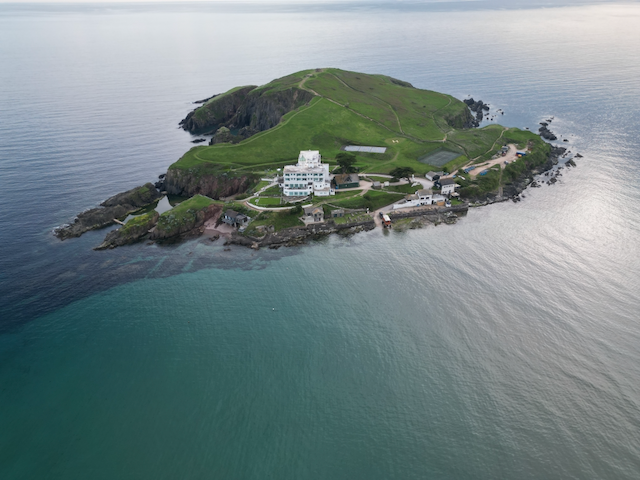
Bigbury Bay sits on the south Devon coast between Bolt Tail to the east and the River Erme to the west. The bay faces broadly SW, which means it catches the Atlantic swell that Cornwall famously hoards but lets enough through to keep South Devon surfable. The two main beaches β Bantham on the western side and Bigbury-on-Sea on the eastern side β sit either end of the bay with Burgh Island standing guard in the middle.
The bay is around 4 miles wide and remarkably unspoilt. There's no pier, no promenade, no arcades. Just sand, sea, a pub or two and one of the most photogenic tidal islands in England.
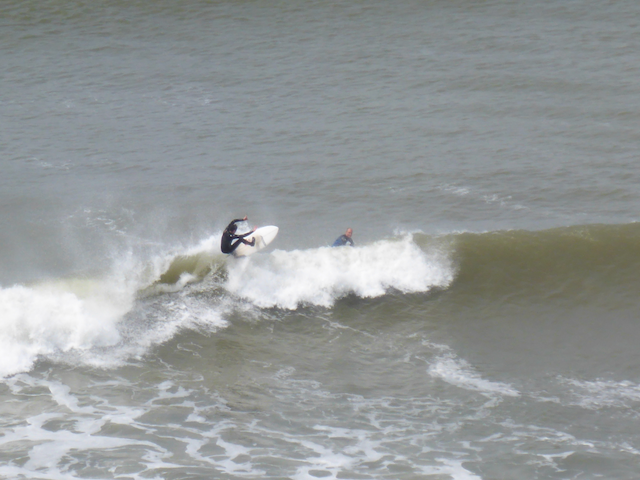
Bantham is the headline act. Situated at the mouth of the River Avon, the rivermouth sandbar creates a consistent left-hander that breaks from 2ft up to double overhead in the bigger swells. It's one of the best beach breaks in South Devon β long walls, rideable for all levels on the right day, and genuinely excellent when a NW groundswell hits on a low incoming tide.
Bigbury beach itself is broader and more exposed. It picks up more swell than Bantham but can be messier β it works best on a solid W or WNW swell direction. The south corner near Burgh Island gets a bit of protection from the island and can produce cleaner waves when the main peak is blown out. Beginners and intermediates tend to prefer Bigbury when the swell is under 3ft; Bantham rewards the surfer who knows how to read the bar.
NW swell, 3ft+ at 10β14 seconds, low to mid incoming tide, light SW or offshore NE wind. When all of those line up, Bantham is extraordinary. Check the live Bantham surf forecast before you make the drive.
W or WNW swell, any size from 2ft upward, mid tide, light winds. The south corner near the island works in a range of conditions and is the go-to when everywhere else is marginal.
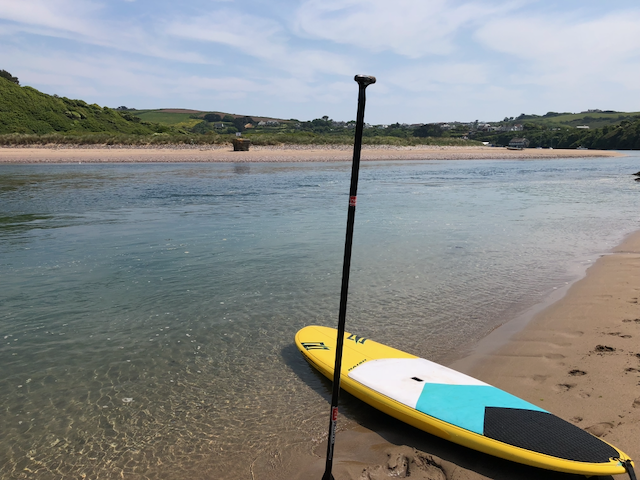
The River Avon estuary behind Bantham beach is one of the finest SUP spots in South Devon. Sheltered from most wind directions, with flat water, stunning scenery and a tidal current that creates interesting paddling on the ebb and flood, it's a very different experience from the ocean beaches.
The estuary is best paddled on a flood or slack tide β paddling against a spring ebb up the River Avon is hard work. High water reveals beautiful hidden creeks and channels that are completely inaccessible at low tide. Give yourself 2β3 hours around high water for the best estuary session.
For wave SUP, when the wind is light and the swell is running at 2β3ft, Bantham produces some rideable runners on a longboard SUP. Keep well clear of the surfer peak β there's usually a mellow section further along the beach that's less crowded and more SUP-friendly.
Bigbury Bay itself is open anchorage β good in settled conditions but exposed to any SW through to SE. In summer, many boats bound for or departing Salcombe stop here for lunch on a neap flood. The holding is good sand in the southern part of the bay but depths vary β sound carefully before anchoring and don't stay if the forecast turns SW.
For powerboats, Bigbury Bay is a fantastic day trip from Salcombe. The passage from Salcombe Bar around Bolt Tail into the bay is beautiful in calm conditions β rocky headlands, dramatic cliffs and the Burgh Island hotel looking like something from an Agatha Christie novel (it is, as it happens β she wrote several of her novels there).
The River Avon dries significantly at low water but a shoal-draft boat can get up on the flood and anchor or pick up a buoy behind Bantham. It's a lovely stop and the Sloop Inn at Bantham is very much worth the dinghy trip ashore.
The bay is productive for bass, particularly around the Bantham rivermouth where the tidal flow concentrates baitfish on the ebb. Mackerel arrive in numbers from May onwards and can be caught from the beaches or on a short boat trip outside the bay. The rocks around Burgh Island hold wrasse year-round and there's good flatfish fishing on the sandy bay bottom.
Check the live fishing forecast for conditions, tides and species advice before you head down.
Bantham has a National Trust car park above the beach (pay and display, busy in summer β arrive before 9am). Bigbury-on-Sea has a large cliff-top car park with views across to Burgh Island. There's a seasonal sea tractor service to Burgh Island when the tide is in, or walk across the sand at low water.
Neither beach has a cash point, and mobile signal on the beach is patchy. Download the tide times before you leave.
Surf, SUP, sailing, tides and fishing β all updated every 20 minutes.
See today's conditions β